The Core Elements of a Durable Bathroom Remodel

When you decide to invest in a major home improvement project, understanding the materials is your most important step. A successful bathroom remodel requires more than just picking out beautiful colors from a design catalog. You need to consider how each component will perform under the constant stress of daily use.
This is especially true for homes located in humid climates, where moisture can quickly degrade inferior products. As experienced interior construction experts, we know that the secret to longevity lies beneath the surface. The choices you make today will determine if your space looks pristine a decade from now.
In the year 2026, manufacturing technologies have given us incredible options for water resistance and durability. Homeowners now have access to materials that blend high-end aesthetics with commercial-grade strength. We will explore exactly what makes a material truly durable, ensuring your investment stands the test of time.
Understanding the Impact of Humidity and Moisture
Water is the primary enemy of any interior space, particularly in a confined area with a shower or bathtub. Florida homeowners face a unique challenge, as the ambient humidity amplifies the moisture generated inside the home. If your remodeling contractor does not prioritize proper waterproofing, structural damage is inevitable.
Materials that are not properly sealed or inherently waterproof will absorb moisture over time. This leads to swelling, warping, and the eventual breakdown of the material fibers. Mold and mildew also thrive in these conditions, creating health hazards and unpleasant odors.
Choosing materials with a low water absorption rate is critical for any successful renovation. You must look beyond the surface appeal and ask your local renovation pros about the technical specifications of every product. A completely waterproof assembly, from the subfloor to the final coat of paint, is the only way to guarantee a lasting result.
The Science of Subfloors and Structural Integrity
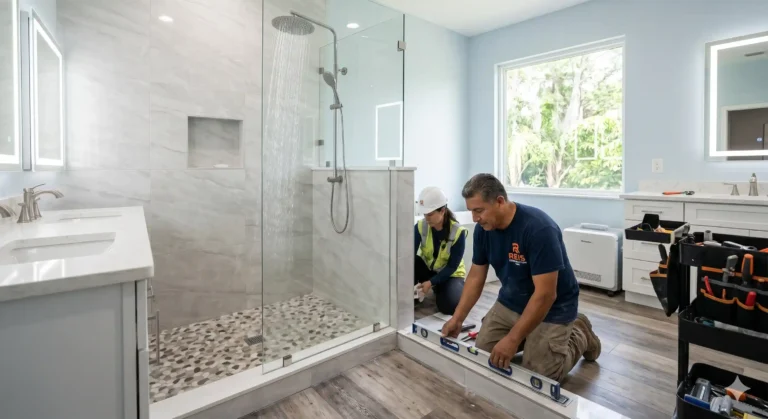
Before a single piece of tile is laid, the structural framework of your room must be evaluated. The joists supporting your floor must be rigid enough to prevent any deflection or bouncing. If the floor moves even a fraction of an inch, your grout lines will crack, and your tiles will eventually come loose.
We always inspect the subfloor for any signs of previous water damage or rot before proceeding. In wet areas, upgrading to a specialized cement board or an uncoupling membrane is an absolute necessity. These underlayments provide a stable, water-resistant base that absorbs movement and protects the finish materials.
Proper curing time for any leveling compounds used on the floor is also heavily monitored. Rushing this step traps moisture beneath the surface, which can compromise the adhesion of the thin-set mortar. A meticulous home renovation company will never cut corners during this invisible but vital preparation phase.
Mastering Tile Selection for Floors and Shower Walls
The surfaces in your wet areas take the most abuse, making your tile choice absolutely crucial. Tile installation is a highly technical process, and the material you select dictates the preparation required. Not all tiles are created equal, and placing the wrong type in a wet zone is a very common mistake.
When evaluating tile, you need to look at its density, slip resistance, and porosity. The abrasion resistance of the glaze will determine how well it holds up to foot traffic and cleaning chemicals. We always recommend focusing on materials engineered specifically for high-moisture environments.
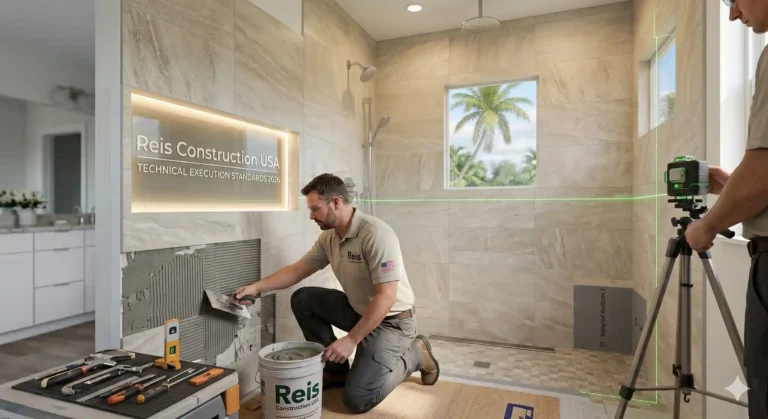
Large format tiles have become the standard in 2026, offering fewer grout lines and a clean, modern aesthetic. However, these larger pieces require a perfectly level substrate to prevent cracking. Your contractor must use advanced leveling systems and premium thin-set mortars to ensure a flawless finish.
Porcelain vs Ceramic Tile, Making the Right Call
Porcelain and ceramic are the most common choices, but they perform very differently under stress. Porcelain tile is fired at much higher temperatures, resulting in a denser, harder, and completely waterproof product. It has a water absorption rate of less than 0.5 percent, making it the superior choice for shower floors and walls.
Ceramic tile is softer and more porous, which makes it easier to cut but more susceptible to water damage if the glaze chips. While ceramic is perfectly fine for a decorative backsplash, we rarely recommend it for primary wet areas. Investing in high-quality porcelain ensures your floors will not stain, scratch, or absorb moisture.
Exploring Natural Stone Installation Options
Natural stone installation brings an unmatched level of luxury to any residential property. Materials like marble, travertine, and quartzite offer unique veining and organic beauty. However, natural stone is inherently porous and requires a strict maintenance schedule to preserve its appearance.
If you choose stone for your shower, you must commit to sealing it regularly with professional-grade penetrating sealers. Certain stones, like marble, are also sensitive to acidic cleaners and can etch if not cared for properly. We often guide clients toward high-definition porcelain that mimics natural stone, providing the look without the extensive upkeep.
The Science Behind Grout and Waterproofing Membranes
Even the most expensive tile will fail if the system beneath it is compromised. The moisture barrier is the true hero of your shower, protecting the wood framing and drywall from rot. Modern installations rely on topical waterproofing membranes, which are applied directly beneath the thin-set mortar.
These membranes, whether sheet-applied or liquid-applied, create an impenetrable envelope. Once the waterproofing is secure, the focus shifts to the grout lines, which are the weakest link in any tile surface. Traditional cementitious grout is porous and will absorb water, dirt, and soap scum if left unsealed.
Epoxy Grout vs Cement Grout
To combat the flaws of traditional materials, epoxy grout has become the gold standard for high-end renovations. Epoxy is made from resins and a filler powder, making it completely waterproof, highly durable, and highly resistant to stains. It never requires sealing, which significantly reduces the long-term maintenance of your shower.
While epoxy grout requires specialized skills to install, the longevity it provides is unmatched. It prevents the discoloration and cracking often seen in older bathrooms. If you want a pristine, maintenance-free shower in 2026, upgrading to an epoxy or advanced urethane grout is a necessary step.
Choosing a Bathroom Vanity That Withstands Daily Use
The vanity serves as the functional centerpiece of your room, providing essential storage and housing your plumbing. Because it sits directly on the floor and is frequently exposed to splashes, the cabinet material must be resilient. A cheap vanity will quickly show signs of water damage, peeling veneer, and swollen baseboards.
When vetting a home renovation contractor, ask about their cabinet sources and construction standards. You want to avoid cabinets built with particleboard, as it acts like a sponge when exposed to water. The joinery techniques, such as dovetail drawers and solid wood corner blocks, are clear indicators of long-lasting quality.
Solid Wood vs Plywood in High Moisture Environments
Solid wood vanities are highly sought after for their strength and premium feel. Wood species like teak, oak, and maple hold up exceptionally well, provided they are sealed with a high-quality polyurethane finish. However, solid wood can expand and contract with humidity changes, so proper ventilation is required.
High-quality, furniture-grade plywood is often considered the best structural choice for vanity boxes. Plywood resists warping better than solid wood and provides excellent screw-holding power for heavy door hinges. It offers the perfect balance of structural stability and moisture resistance for a demanding bathroom environment.
The Limitations of MDF Cabinetry
Medium Density Fiberboard, commonly known as MDF, is widely used in mass-produced vanities. While it provides an exceptionally smooth surface for painted finishes, its core is highly vulnerable to moisture. If the protective painted layer is scratched or compromised, water will seep in and cause the material to bubble and disintegrate.
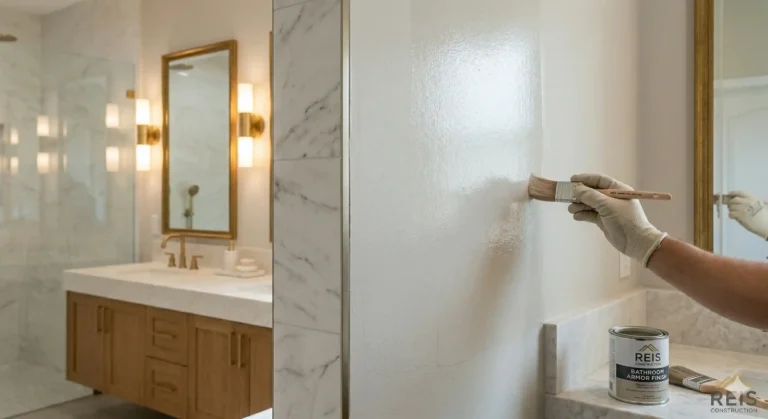
We generally advise against using MDF for the structural box of the vanity or the baseboards touching the floor. If you desire a painted look, choosing a vanity with a plywood box and MDF doors is a safer compromise. Always ensure the paint used is a high-quality, VOC-free enamel designed specifically for humid environments.
Countertop Materials, Natural Stone and Quartz
The vanity top must endure cosmetics, hot hair tools, toothpaste, and hard water on a daily basis. Quartz countertops remain the most popular choice for durability in 2026 because they are engineered to be non-porous. Quartz does not require sealing, resists staining, and offers a uniform appearance that suits modern designs perfectly.
If you prefer the elegance of natural stone, granite and quartzite are excellent choices due to their extreme hardness. Marble, while visually stunning, is softer and more prone to etching from acidic products like facial toners or citrus-based soaps. Whichever surface you choose, ensure your contractor uses high-grade silicone to seal the edges where the stone meets the wall.
Plumbing Fixtures Designed for Longevity and Style
Faucets, showerheads, and rough-in valves are the mechanical workhorses of your bathroom. They are subjected to constant water pressure, temperature fluctuations, and physical operation multiple times a day. Selecting cheap fixtures often leads to internal leaks, failing cartridges, and peeling finishes within just a few years.
To ensure reliability, you must focus on what is inside the fixture, rather than just its external appearance. The internal valve components govern the flow and temperature of your water with precision. Choosing fixtures with ceramic disc valves is essential, as they are nearly impervious to wear and prevent the dripping associated with old rubber washers.
The Importance of Solid Brass Construction
The body of a high-quality faucet should be constructed entirely of solid cast brass. Brass is highly resistant to corrosion and provides a sturdy housing for the internal ceramic cartridges. Many budget-friendly fixtures use plastic or zinc alloys for the internal waterways, which are prone to cracking and rapid degradation.
When you lift a solid brass fixture, you can immediately feel its weight and substantial build quality. While these fixtures require a larger initial allocation of your budget, they will outlast inferior options by decades. Your interior construction experts will always recommend brass rough-in valves for any custom shower system to prevent catastrophic leaks behind your walls.
PVD Finishes for Ultimate Corrosion Resistance
The exterior finish of your fixtures must withstand hard water spots, cleaning chemicals, and constant touching. Traditional electroplated finishes can scratch or tarnish over time, especially in coastal Florida environments. To combat this, the industry has shifted toward Physical Vapor Deposition, widely known as PVD technology.
A PVD finish is molecularly bonded to the brass, creating an incredibly hard and scratch-resistant surface. Whether you choose brushed nickel, matte black, or brushed gold, a PVD coating ensures the color will not fade or peel. This technology represents the absolute pinnacle of material science in 2026 residential plumbing.
Specialized Installation Techniques for Modern Bathrooms

Having the right materials is only half the battle, the execution is what truly matters. Advanced materials require precise, specialized installation techniques to perform exactly as intended. A true remodeling contractor understands the strict building codes and manufacturer guidelines required for these modern systems.
For instance, the transition areas between different materials, like tile and painted drywall, must be handled with extreme care. Proper expansion joints are necessary to allow the house to settle without cracking your grout lines. Attention to these hidden details is what separates a professional, long-lasting build from a quick cosmetic flip.
Curbless Showers and Large Format Tiles
Curbless showers are incredibly popular for their sleek, continuous look and vital accessibility benefits. However, removing the traditional shower curb requires altering the floor joists or floating the rest of the bathroom floor to create the necessary slope. This is a complex structural task that demands a highly skilled and experienced team.
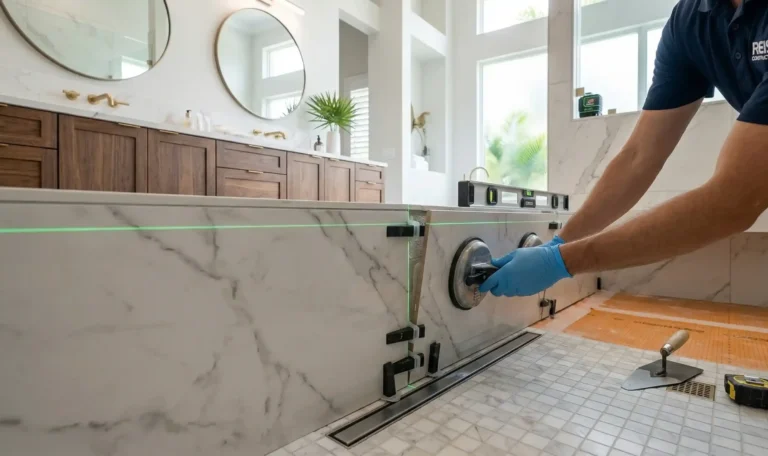
When pairing a curbless design with large format tiles, the slope to the drain must be calculated perfectly. A linear drain is typically required, allowing the large tiles to maintain a single geometric plane without awkward cuts. Your contractor must ensure the moisture barrier extends seamlessly across the entire bathroom floor to prevent structural rot.
Proper Ventilation and Moisture Management
Even with the best waterproof materials, controlling the ambient moisture in the room is critical for longevity. A high-quality exhaust fan is not just a luxury, it is a structural necessity to protect your drywall and paint. The fan must have the appropriate CFM rating to clear the humid air rapidly after a hot shower.
We install smart ventilation systems that detect rising humidity levels and activate automatically. This ensures the room dries out efficiently, preventing mold growth on the ceiling and protecting your solid wood vanities from expanding. Proper ducting, venting directly to the exterior of the house, is also strictly enforced to maintain your home’s integrity.
Comparing Bathroom Materials for Quick Reference
To help you visualize the differences between these core materials, we have compiled a quick reference guide. Understanding these comparisons will help you communicate effectively with your home renovation company during the early planning phases.
| Material Category | Best Choice for Durability | Budget-Friendly Alternative | Key Characteristic |
| Shower Tile | High-Density Porcelain | Glazed Ceramic | Porcelain has a water absorption rate under 0.5% |
| Grout | Advanced Epoxy Grout | Sealed Cement Grout | Epoxy is inherently waterproof and stain-proof |
| Vanity Box | Furniture-Grade Plywood | Sealed MDF | Plywood resists warping in high humidity |
| Vanity Top | Engineered Quartz | Cultured Marble | Quartz is non-porous and requires zero sealing |
| Fixture Body | Solid Cast Brass | Zinc Alloy / Plastic | Brass will not corrode or crack under pressure |
| Fixture Finish | PVD Coating | Standard Electroplating | PVD bonds molecularly to prevent scratching |
Ready to Transform Your Space with Reis Construction USA?
Choosing the right materials is a complex process, but you do not have to make these difficult decisions alone. Our team of interior construction experts is here to guide you through every technical specification and design choice, ensuring your home deserves the highest level of craftsmanship and structural integrity available in 2026.
To ensure your renovation is built to last a lifetime, we prioritize:
Advanced Engineering: We focus on what is behind the walls, from advanced waterproofing systems to structural integrity.
Premium Material Execution: Our team specializes in luxury large-format tile installation and custom solid wood vanities.
Professional Jobsite Standards: We treat every project with the utmost respect, ensuring your home remains clean, safe, and organized throughout the construction process.
Ready to invest in a space engineered to last? Contact us today to start discussing your vision and material options with our dedicated team, or call us directly at: (407) 512-9194
Expert Bathroom Remodeling Services Across Central Florida
When choosing the best bathroom remodeling contractor, working with a local team that understands Florida’s unique technical requirements—such as moisture control and specific building codes—can make a significant difference in the final result. Reis Construction USA provides professional renovation services across multiple cities, delivering tailored solutions based on each property’s unique needs.
If you are located in one of the areas below, explore our dedicated service pages to learn more about how we can help with your project:
- Bathroom Remodel in Altamonte Springs, FL
- Bathroom Remodel in Apopka, FL
- Bathroom Remodel in Brandon, FL
- Bathroom Remodel in Casselberry, FL
- Bathroom Remodel in Clearwater, FL
- Bathroom Remodel in Clermont, FL
- Bathroom Remodel in Dunedin, FL
- Bathroom Remodel in Eustis, FL
- Bathroom Remodel in Groveland, FL
- Bathroom Remodel in Horizon West, FL
- Bathroom Remodel in Lake Nona, FL
- Bathroom Remodel in Lakeland, FL
- Bathroom Remodel in Largo, FL
- Bathroom Remodel in Maitland, FL
- Bathroom Remodel in Mount Dora, FL
- Bathroom Remodel in New Smyrna Beach, FL
- Bathroom Remodel in Oakland Park, FL
- Bathroom Remodel in Ocoee, FL
- Bathroom Remodel in Oldsmar, FL
- Bathroom Remodel in Orlando, FL
- Bathroom Remodel in Palm Harbor, FL
- Bathroom Remodel in Ruskin, FL
- Bathroom Remodel in Safety Harbor, FL
- Bathroom Remodel in Sarasota, FL
- Bathroom Remodel in Siesta Key, FL
- Bathroom Remodel in St Petersburg, FL
- Bathroom Remodel in Tampa, FL
- Bathroom Remodel in Tarpon Springs, FL
- Bathroom Remodel in Temple Terrace, FL
- Bathroom Remodel in Windermere, FL
- Bathroom Remodel in Winter Garden, FL
- Bathroom Remodel in Winter Park, FL