Why Choosing the Best Bathroom Layouts for Small Spaces Matters in 2026

When dealing with limited square footage, every decision regarding your bathroom layout can either create a cramped closet or a functional masterpiece. In 2026, homeowners are moving away from oversized, wasted spaces and focusing on high-efficiency floor plans that prioritize flow and ergonomics.
A smart bathroom renovation in a small area isn’t just about choosing smaller sinks, it is about the strategic placement of plumbing fixtures to ensure code compliance while maintaining comfort. By optimizing your floor plan, you increase the usability of the room without the need for an expensive structural expansion.
Whether you are updating a guest powder room or a compact master bath, understanding spatial geometry is the key. In the Florida market, particularly in high-density areas, a well-executed small bathroom remodel significantly boosts property resale value and daily livability.
Let’s explore the most effective layouts that professional home renovation contractors use to transform tight quarters into breathable, modern environments.
Fundamental Small Bathroom Layouts and Their Benefits
Designing for small spaces requires a deep understanding of residential building codes and clearance requirements. A standard full bathroom usually requires at least 35 to 40 square feet, but with the right layout configuration, even a 30-square-foot space can feel spacious.
The goal is to minimize “dead space” where nothing happens. In 2026, we utilize linear configurations and corner placements to keep the center of the room open, allowing for better movement and a less claustrophobic feel.
The Classic One-Wall Layout
In this configuration, the toilet, vanity, and shower are all lined up along a single wall. This is the most cost-effective bathroom remodel strategy because it keeps all rough-in plumbing and waste lines in one trench.
It simplifies the venting system and reduces the amount of supply piping needed behind the drywall. For narrow bathrooms, this layout provides a clear walking path, which is essential for accessibility and flow.
The Corner Shower Configuration
By placing the shower stall in a corner, you free up wall space for a larger double vanity or additional storage. In 2026, we often use neo-angle shower pans or curved glass enclosures to soften the footprint and prevent sharp corners from obstructing the walking area.
Innovative Solutions for Compact Bathroom Floor Plans
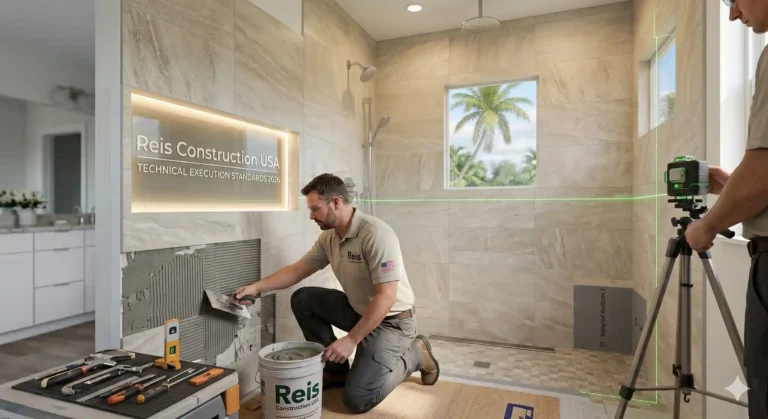
In 2026, innovation in plumbing has provided us with tools that were once exclusive to luxury hotels. One of the biggest shifts in home renovation is the adoption of European-style wet rooms, where the entire bathroom is waterproofed, eliminating the need for bulky shower curbs.
This “barrier-free” approach makes the floor look continuous, tricking the eye into seeing a much larger space. It also solves the problem of trying to fit a separate tub and shower into a room that only has space for one.
Utilizing Wall-Hung Fixtures and Floating Vanities
A wall-mounted toilet with an in-wall tank can save up to 10 inches of floor space. Similarly, a floating vanity exposes more of the bathroom flooring, which instantly makes the room feel more expansive.
| Fixture Type | Space-Saving Benefit | Installation Requirement |
| Wall-Hung Toilet | Saves 8-12 inches of depth | In-wall carrier system |
| Floating Vanity | Increases visible floor area | Reinforced wall blocking |
| Corner Sink | Utilizes neglected corners | Offset plumbing lines |
The “Pocket Door” Strategy
A standard door swing can take up nearly 9 square feet of usable space. By installing a pocket door, you regain that area for a towel warmer or a shallow linen cabinet. In bathroom projects, this is often the single most effective way to improve functionality in tight quarters.
Visual Expansion Techniques in Small Bathroom Remodeling
The way we use materials and light significantly impacts the perception of space. In 2026, interior design for small bathrooms focuses on monochromatic palettes and large-scale surfaces that reduce visual noise.
By using large-format porcelain tiles on both the floors and walls, we minimize grout lines. Fewer lines mean fewer visual “breaks,” which helps the eyes glide across the room, creating an illusion of depth.
Strategic Use of Glass and Mirrors
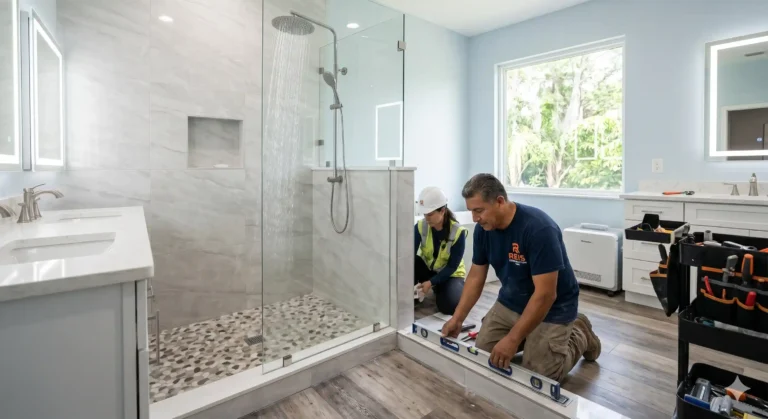
A frameless glass shower enclosure is essential for small layouts. It allows the eye to see the full depth of the room, including the shower tile, rather than being blocked by an opaque curtain.
Wall-to-Wall Mirrors: Doubling the reflection of light.
Backlit Mirrors: Providing shadow-free lighting without the need for bulky sconces.
Glass Shelving: Storage that doesn’t add visual weight to the walls.
Lighting the Vertical Plane
In small spaces, we avoid large, hanging light fixtures. Instead, we use recessed LED lighting and cove lighting to wash the walls with light. This makes the ceiling feel higher and the walls feel further apart, enhancing the overall spatial experience.
Technical Considerations: Plumbing and Ventilation in Tight Spaces

When you move fixtures to optimize a layout, the plumbing infrastructure must be handled with precision. Changing the location of a drain stack or a vent pipe requires a licensed plumber who understands the limits of horizontal pipe runs within floor joists.
Furthermore, high-performance ventilation is non-negotiable in small bathrooms. Because the volume of air is smaller, steam builds up rapidly, which can lead to peeling paint and mildew if the exhaust fan isn’t properly sized for the CFM requirements of the space.
Recessed Storage and Built-In Niches
In 2026, we utilize the space between the wall studs to create recessed medicine cabinets and shower niches. This provides essential storage for toiletries without encroaching on the limited floor or counter space.
Smart Drainage Solutions
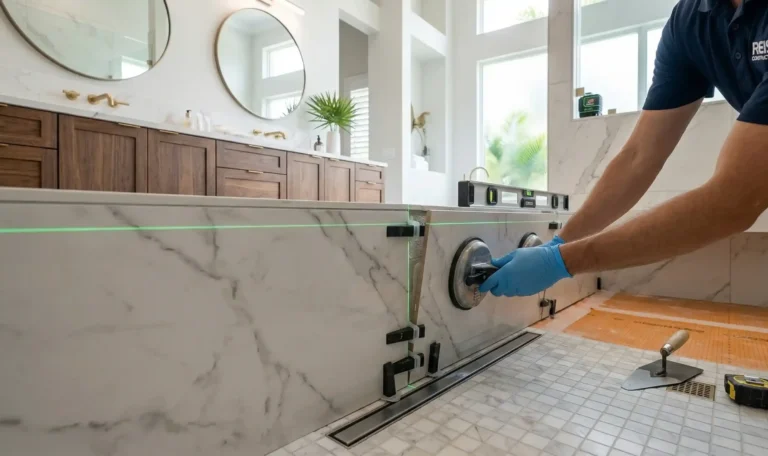
Linear drains allow for a single-slope floor, which is ideal for small curbless showers. This eliminates the need for a traditional center drain and allows for the use of large format tiles on the shower floor, keeping the design consistent with the rest of the room.
Expert Bathroom Remodeling Across Florida
A successful bathroom remodel in a small space requires a balance of creative design and technical expertise. At Reis Construction USA, we specialize in home renovations that maximize every inch of your property, ensuring beauty and functionality go hand in hand.
Whether you are in a historic home in Winter Park or a modern condo in Tampa, our team of general contractors is ready to help you navigate the complexities of permits, layout, and material selection in 2026.
Ready to transform your small bathroom? Call us today: (407) 512-9194
Ready to maximize your space? Contact our expert team here to begin your consultation.
Our Florida Service Areas
We provide specialized bathroom remodel solutions in the following cities: